

AI Summary
This blog explores why precast construction is becoming essential for smart city development in India. It explains how traditional construction methods struggle with delays, inconsistent quality, labour dependency, and cost overruns, while precast manufacturing offers faster delivery, better quality control, reduced waste, and safer execution. The article also highlights Urbanaac’s role in industrializing construction through system-based precast manufacturing, enabling large-scale infrastructure, institutional, commercial, and mixed-use developments to be delivered with greater speed and precision. The key message is that the future of smart cities depends not only on digital infrastructure but also on how efficiently and reliably the physical city is built.
India builds in bursts.
A flyover here. A metro stretch there. A new township rising overnight in one corner, while another waits years for basic infrastructure to catch up. The ambition is not the problem. The method is.
And that’s where the conversation around precast solutions for smart cities in India quietly becomes unavoidable.
Because at some point, the question stops being what are we building?
It becomes how fast can we build without breaking it?
Why traditional construction is struggling with smart city timelines
Most Indian infrastructure still depends on conventional on-site construction. It is familiar, labour-heavy, weather-dependent, and deeply sequential.
One step waits for another. One delay triggers five more.
In smart city projects, that rhythm simply doesn’t hold anymore.
Common challenges include:
- Project delays due to on-site dependencies
- Inconsistent quality across large-scale builds
- Labour variability and site management issues
- Material wastage and cost overruns
- Safety risks in high-activity zones
Smart cities don’t just need more construction. They need controlled construction.
Precast construction: shifting the site to the factory
Precast changes the location of certainty.
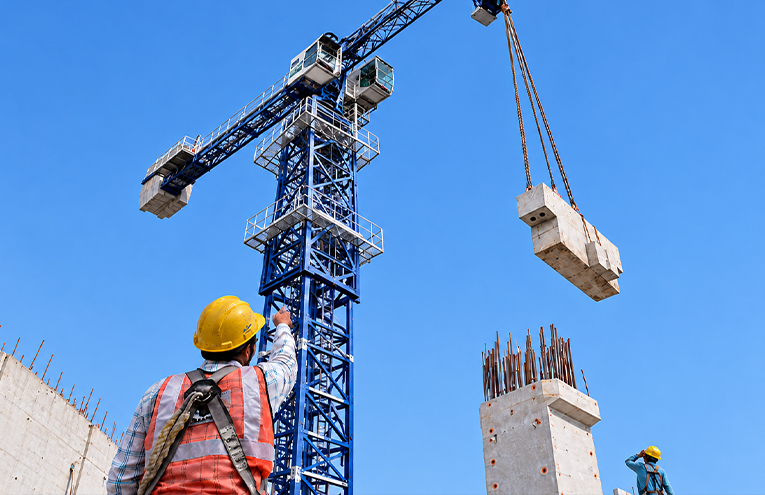
Instead of building everything on-site, key structural components, walls, slabs, beams, staircases, are manufactured in controlled factory environments and then assembled at the site.
It sounds simple. It isn’t.
Because what it actually does is remove unpredictability from the most unpredictable part of construction.
The advantages are practical, not theoretical:
- Parallel execution of manufacturing and site work
- Faster project delivery timelines
- Higher structural consistency
- Reduced dependency on site conditions
- Lower material wastage
In short: less chaos, more control.
Urbanaac and the industrialisation of construction
In Ahmedabad, Urbanaac is working within this shift, not as a trend follower, but as part of a larger structural change in how India builds.
Their approach is straightforward: move construction from fragmented site activity to system-based manufacturing.
Instead of treating every project as a one-off struggle, precast allows repeatable precision. Components are produced with standardisation, tested for consistency, and delivered ready for assembly.
That changes the speed equation entirely.
Where precast is already showing impact
Urbanaac’s work spans across large-scale infrastructure segments, projects where timelines and coordination matter more than architectural experimentation.
This includes involvement in:
- Large public infrastructure ecosystems
- Institutional campuses and educational developments
- Hospitality and commercial projects
- Industrial and mixed-use developments across India
Among the better-known associations in this space are developments linked to major infrastructure environments such as stadium-scale ecosystems and urban commercial zones, along with institutional builds in Ahmedabad’s growing education and tech corridors.
The pattern is consistent: large scale, high pressure, low margin for delay.
Exactly where precast stops being optional.
Why smart cities in India are quietly moving toward precast
Smart cities are often discussed in terms of digital infrastructure, IoT, traffic systems, data layers.
But none of that works if the physical city is unstable.
Precast becomes the silent foundation layer:
- Faster housing delivery for urban expansion
- Reliable infrastructure for transport systems
- Scalable construction for industrial corridors
- Reduced disruption in dense city zones
It is not a futuristic idea anymore. It is already being used where timelines cannot afford experimentation.
The real shift: construction becoming manufacturing
There is a quiet but important change happening in Indian infrastructure.
Construction is starting to behave like manufacturing.
Predictable inputs. Controlled environments. Repeatable outputs.
Companies like Urbanaac are part of that transition, not by adding noise to the smart city conversation, but by solving the part nobody sees: how the city is physically assembled.
Because in the end, smart cities are not defined by their technology layers.
They are defined by whether they were built in time.
And precast is becoming the reason many of them finally will be.